
Insights: Closing the AI Value Realisation Gap 2.0
KEY TAKEAWAYS
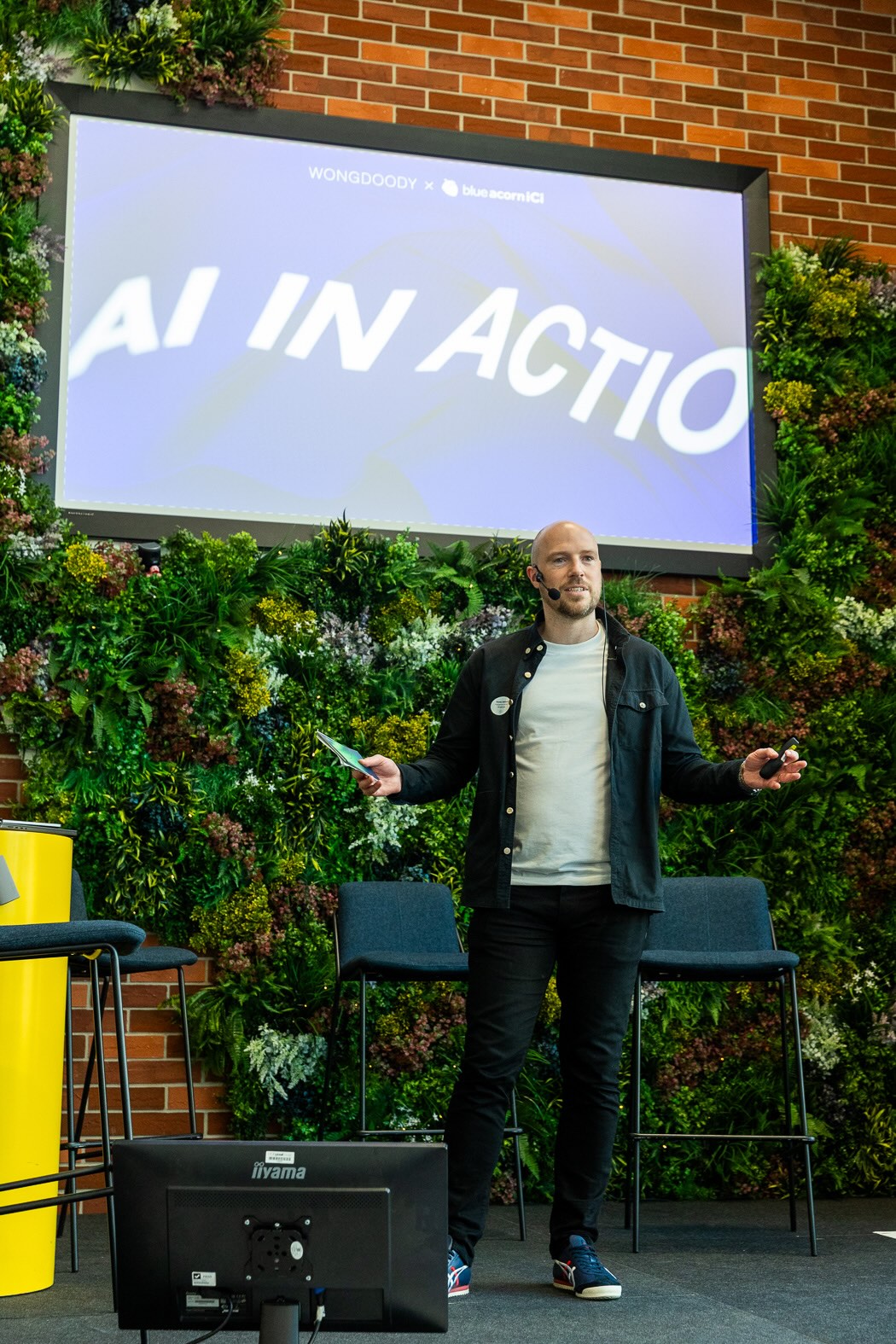
AI adoption is accelerating, but realising its value has been slow going for many. Our 2nd edition of Closing the AI Value Realisation Gap, hosted in London, saw industry leaders from the likes of Metro Bank, Carlsberg Britvic, Adobe, IBM, BAT and Mitsubishi Motors Canada, come together to discuss how organisations can move from pilots to production and from experimentation to enterprise-wide impact.
To Human-Ai-Human or to Ai-Human-Ai?
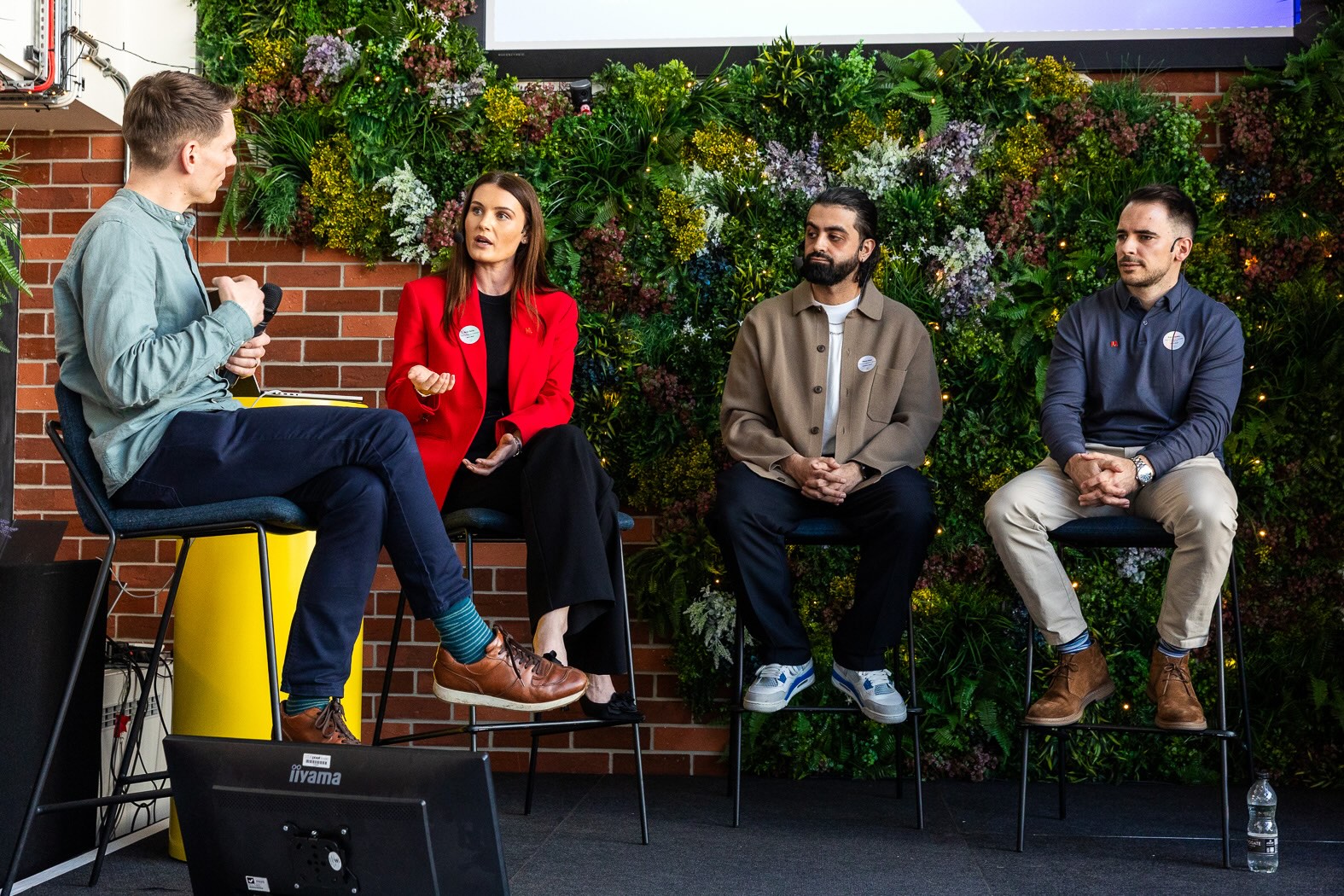
Our opening panel explored how marketing teams can combine human expertise with AI agents, the role COE's play in driving AI adoption and where governance and risk fit in.
David Stocks, Head of Strategy at WongDoody, posed the question, “As marketing workflows become more automated, what stays human?”
For Briar Reidy, Head of Brand & Campaigns at Metro Bank, authenticity is a non-negotiable. “Anything you take to market from an advertising or creative perspective needs to be authentic.” Briar stressed that while AI can improve speed and efficiency, human judgment is essential to ensure content reflects brand values and resonates with the audience.
Reidy referenced an AI-human-AI framework, where AI generates and refines outputs and human intervention happens in the middle.
Alex Rapallo, Head of Digital & Customer Marketing at Metro Bank took a compliance and governance angle, favouring a human-AI-human approach. He noted that in highly regulated industries, it’s key to have humans at both the beginning and end of the process.
Shaun Keya, Global AI & Automation Manager at Carlsberg Britvic, emphasised that to encourage adoption and progress, CoEs should set the guardrails and then empower teams to experiment freely.
"It's really important to give everyone the opportunity to give ideas, to try things, to play with things."
From opportunity to output
WongDoody’s SVP, Bianca Mack and Director of Strategic Sales, Fayssal Loussaief, made the value of AI tangible in session 2 by showcasing a proprietary AI-powered platform that collapses the cost of content production – a key pain point for marketers.
The platform, designed in collaboration with Infosys & Google, takes a single creative asset and generates endless variations according to language, market, aspect ratio and theme. It interprets context and relies on brand guidelines to ensure the output is consistent.
A major win is cost reduction. Assets created through this platform cost just a few cents to create, a huge saving compared to the $150 it would take without it.
Mack noted that before the project kicked off, they paid close attention to the production layer, taking care to integrate governance, compliance and asset management.

The evolution of search
How to get cited in AI overviews and LLM conversations is another top-of-mind issue for marketers. Aaron Kiely, Partner Solution Consultant at Adobe tackled the question, positioning it around the shift “from rankings to relevance”.
Kiely explained that the proliferation of AI overviews, summaries and recommendations introduces a critical risk for brands that stand still.
“We’ve seen a big drop in organic search and more use of AI overviews… This means that consumers are making decisions about you without even going to your website.”
To counteract this, Aaron stressed the importance of building good human experiences but not ignoring agentic interactions or traffic. To close off, he introduced Adobe’s LLM Optimiser as a way to help brands adapt to the shifting landscape and embrace AI search.
Fixing the value leak
The penultimate session focused on the value leak. The panel consisted of Sinziana Stoicescu, Senior Marketing Transformation Manager at BAT, Michael Klazema, Author and thought leader at Content Value Chain, and Aaron Kiely, Partner Solution Consultant at Adobe. It was adjudicated by Neil Bacon, Adobe Practice Leader at Blue Acorn iCi.
In a world where marketers have so many systems, tools and access to data, one panellist argued that the value leak was not down to AI but to businesses.
“It’s not a technology failure, as cliché as it sounds, it's an organisational failure and it's worse than they say.”
They then went on to explain that implementing AI before you have the correct workflows and processes in place is like doing a really expensive audit.
Klazema added to this, citing disorganised and messy marketing operations as a key friction point. Orchestration is, from his perspective, the key to realising impact and expanding from a narrow view focused on efficiency to one focused on value.
“We move from tools to pilots rather than creating an agent that orchestrates everything.”
It’s evident that fragmented systems and inconsistent governance are a major source of value leak. When asked how to fix this, the panel noted the importance of mapping out processes, deciding what should be the job of AI versus humans and reframing the question: “Don't talk in terms of when can we trust AI to produce this or that safely. Say how do I design an AI system so it can execute those specific use cases,” argues Klazema.
Overall the theme was clear: value isn’t lost in the technology itself but in disconnected workflows, poor data foundations and lack of scalable systems.
Getting a fast start not a false start
The final session grounded the afternoon’s discussions with a real-world use case of AI featuring Mitsubishi Canada’s Intelligent Companion.
The tool was built with IBM Watson Orchestrate to support the launch of the 2025 Mitsubishi Outlander. Intelligent Companion offers customers a personalised experience where they can ask questions, request virtual tours, explore finance options and even book in-person appointments.
Built and launched in just 12 weeks the Mitsubishi team recognised it could do loads of testing internally, but wouldn’t know whether consumers resonated with the tool until they gave them an opportunity to try it.
“We’re a challenger brand, and if we don't take those chances and differentiate ourselves, then our competitors will overtake us,” argued Steve Carter, Marketing Director, Mitsubishi Motors Canada.
While initial engagement was low, it quadrupled as the team refined responses and filled gaps in information.
Trust was a core theme that came through, with Kim Abbot, VP of Experience Design at WongDoody, explaining that the goal was to make the experience feel less like a chatbot and more like “an always-on super salesperson.”
Mind the gap
Ultimately, the businesses that are closing the AI value realisation gap are the ones solving real problems, embedding AI into the value chain, and scaling through continuous iterations.

FIVE THINGS TO REMEMBER
1. AI value isn’t a tech problem; it’s an organisational one
The biggest barrier to realising AI impact is organisational structure and poor data foundations.
2. Human and AI is the winning model
There’s no-one-size-fits-all workflow for businesses, but human oversight can’t be overlooked.
3. Start with real problems
Don’t try to shoehorn AI into workflows and processes; instead start with a need and see how it can help.
4. Scale comes from infrastructure
AI success depends on what lies beneath the surface – governance, data quality and brand guidelines.
5. The cure to ‘pilotitis’ is action
Don’t wait for things to be perfect; identify a real use case, iterate and scale what works.