
AI, Events
Why Creativity Has a Bigger Role in Enterprise AI Than Most CTOs Realize
This is a headline lorem ipsum.
This is a headline lorem ipsum.
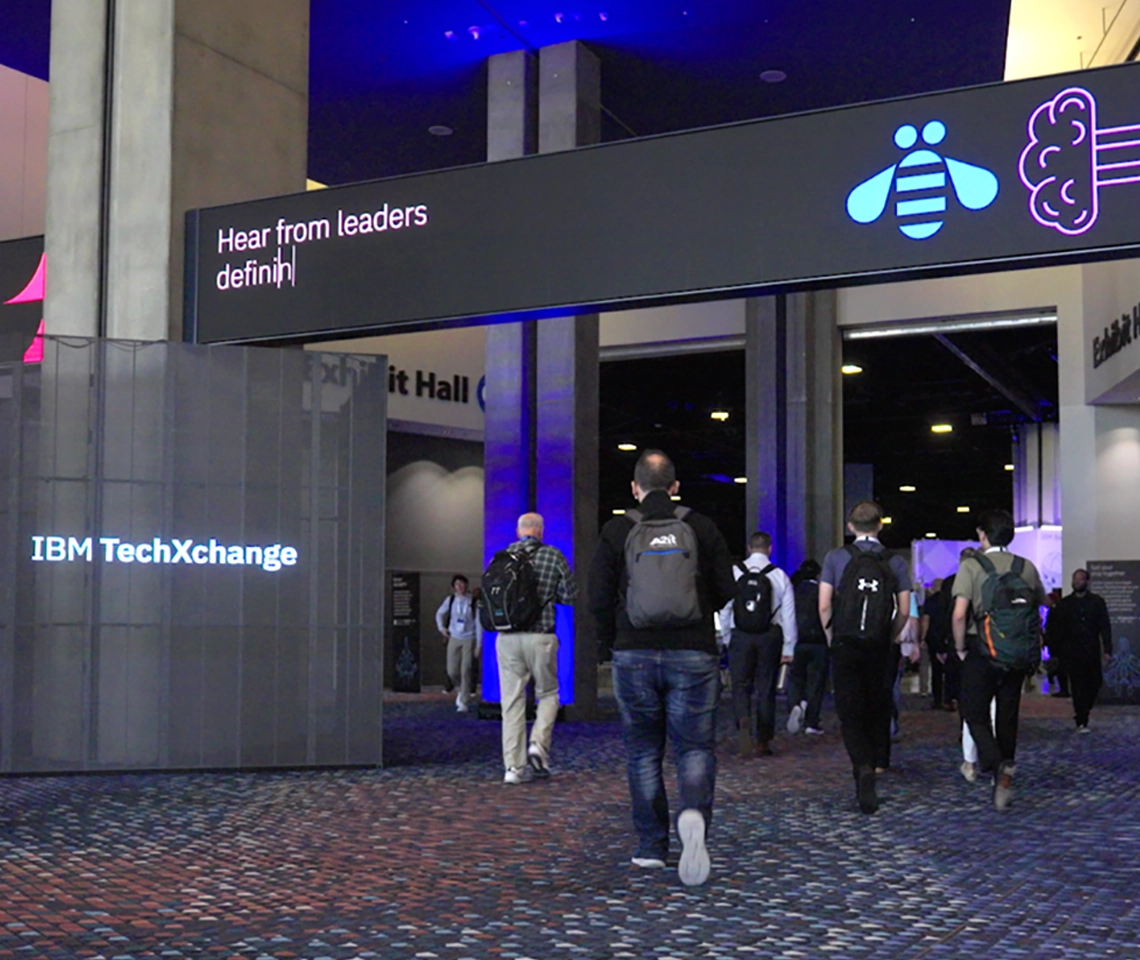
Last month, I had the pleasure of speaking at the IBM TechXchange in Atlanta, Georgia. It was an extremely well-orchestrated event, with enriching discussions around where AI is going, what capabilities it will bring, and how to build agentic workflows and scalable systems at increasingly lower price points and compute costs. And, as inspiring as it was to see first hand how the developer community can do so much more with greater efficiency, it served as a helpful reminder about the role of creativity, its impact on business outcomes, and what many of these conferences tend to gloss over in their agendas and keynote addresses.
Walk the floor of any technology conference today and you’ll hear a familiar refrain: faster models, smarter agents, larger context windows, better orchestration. As enterprise leaders race to implement agentic AI, most conversations remain anchored in technical capability: How many workflows can be automated? Which foundation model performs best? How quickly can agents interact with enterprise systems?
Those are important questions, but not the questions that create the most valuable competitive advantage.
The uncomfortable truth about AI is that the technology itself is becoming less differentiating by the day. The capabilities that felt revolutionary three months ago are rapidly becoming table stakes. Models improve. Platforms mature. Infrastructure becomes more accessible. Eventually, nearly everyone has access to the same technological building blocks.
But within this technology challenge lies a great opportunity for Design. Essentially, organizations have treated Design as merely a layer in product development, an artifice that is applied rather than a strategic pursuit inclusive of technology, strategy, and engineering. In the age of agentic AI, that thinking is not only outdated, but also costly and time intensive. For one, AI makes what was the costliest part of the value chain – The Build – exponentially cheaper. Secondly, AI allows non-practitioners to seemingly be able to do what other disciplines have trained their entire careers to do. Which leaves one with little else than to pursue “efficiency” and speed as the value proposition for AI. But this does not make for strategic differentiation. In other words, “good enough” simply cannot be the goal for AI when the floor is raised across the board. This requires enterprises to push the value proposition upstream. The word used to describe this differentiation is “taste”, which can have many definitions depending on the audience and the context. But when it happens, it’s because value has migrated elsewhere. It moves to imagination.
The gap between “good enough” and “differentiated” is where Design creates Value.
A perfectly engineered agent that solves the wrong problem creates little business value. An agent that understands context, reduces friction, builds trust, and helps people make better decisions creates a very different outcome.
At wongdoody, we spend a significant amount of time helping organizations bridge the distance between technical possibility and human relevance. Increasingly, we’re seeing the same pattern emerge across industries. Companies become fascinated by what an AI system can do, while customers remain focused on what they need to accomplish.
The most successful AI experiences won’t be measured by the sophistication and importance of the underlying architecture. They'll be judged by whether customers feel understood, empowered, and confident enough to take action.
Consider the evolution happening in customer experience. For decades, digital experiences were largely transactional. Customers searched, navigated, and clicked while businesses optimized parts of the journey as budgets and time permitted. We call these “deterministic” workflows. Agentic experiences fundamentally change that dynamic. The interface is becoming less about navigation and more about conversation, i.e., “non-deterministic”journeys.
Technology provides the intelligence. Design provides the meaning.
That’s why partnerships between Design and Technology organizations are becoming increasingly important. In our work alongside IBM’s watsonx platform, the most interesting conversations are the ones between and among people, aided and enabled by the platform.
· What decision is someone trying to make?
· What uncertainty are they experiencing?
· What information do theyneed at that particular moment?
· How much autonomy should an agent have?
· When should a human remain in control?
· How do we bridge the divide between customer, service rep, back-office administrator, and the product set?
These questions shape whether a technical solution becomes a valuable business experience.
The organizations seeing the greatest returns from AI aren’t viewing designers and technologists as participants in separate phases of a project. They treat them as collaborators from the beginning.
Design helps identify opportunities worth pursuing. Technology determines what is possible.
Together, they create experiences that generate measurable value for both customers and the business.
As barriers to technology continue to fall, more organizations will gain the ability to build bespoke intelligent systems. Far fewer will possess the ability to also envision experiences customers haven’t seen before.
We believe that distinction matters, because customers don’t choose products based on technical specifications. They choose products that solve problems elegantly, fit naturally into their lives, and earn their trust over time.
The next generation of market leaders won’t emerge because they deployed more agents than their competitors. They’ll emerge because they designed better experiences around them.
For now, efficiency continues to dominate the conversation. But when technology is increasingly available to everyone at all abilities, then Creativity can no longer be treated as a luxury. Rather, it is becoming the multiplier.
Imagination is the hardest thing to replicate. Which is precisely why Design matters more than ever.
Lorem ipsum dolor sit amet, consetetur sadipscing elitr, sed diam nonumy eirmod tempor invidunt ut labore et dolore magna aliquyam erat, sed diam voluptua. At vero eos et accusam et justo duo dolores et ea rebum. Stet clita kasd gubergren, no sea takimata sanctus est Lorem ipsum dolor sit amet.
This is a headline lorem ipsum.
This is a headline lorem ipsum.
Lorem ipsum dolor sit amet, consetetur sadipscing elitr, sed diam nonumy eirmod tempor invidunt ut labore et dolore magna aliquyam erat, sed diam voluptua. At vero eos et accusam et justo duo dolores et ea rebum. Stet clita kasd gubergren, no sea takimata sanctus est Lorem ipsum dolor sit amet.


This is a headline lorem ipsum.
This is a headline lorem ipsum.
Lorem ipsum dolor sit amet, consetetur sadipscing elitr, sed diam nonumy eirmod tempor invidunt ut labore et dolore magna aliquyam erat, sed diam voluptua. At vero eos et accusam et justo duo dolores et ea rebum. Stet clita kasd gubergren, no sea takimata sanctus est Lorem ipsum dolor sit amet.

Phil Golub
SVP, Experience Design
