
The Challenge
Kärcher's product portfolio is growing. So are the markets, the channels, and the appetite for content. Every launch needs more assets, in more variations, for more places—and the quality bar keeps climbing.
Traditional photography wasn't built for this. It's tied to physical prototypes, fixed locations, narrow filmshooting windows, and rigid logistics. By the time the assets land, the next product is already in the pipeline. We needed away to produce brand-grade product imagery that scales with the business—without compromising on accuracy, control, or visual identity.



Our Approach
We didn't replace photography. We rebuilt it.
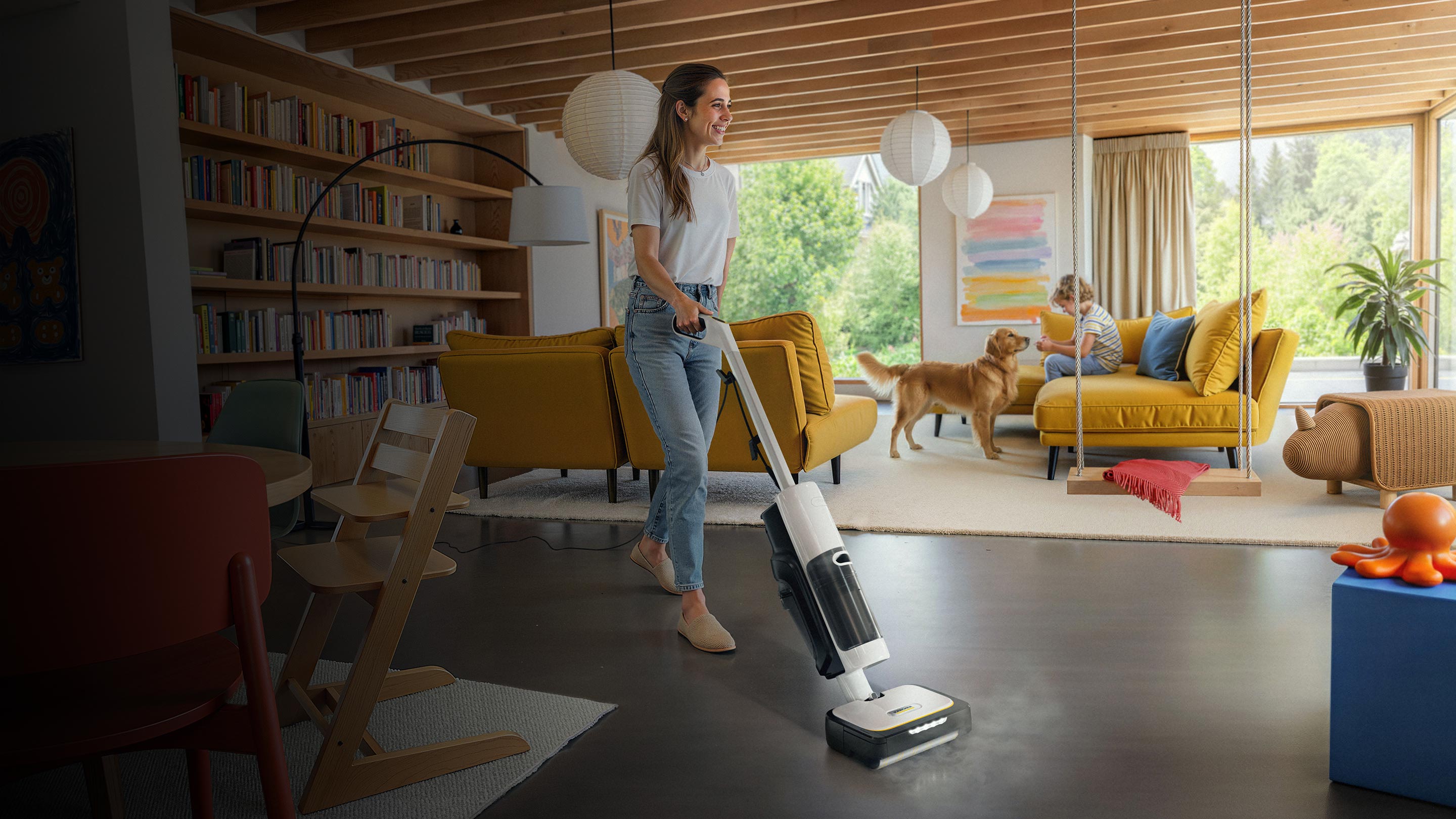
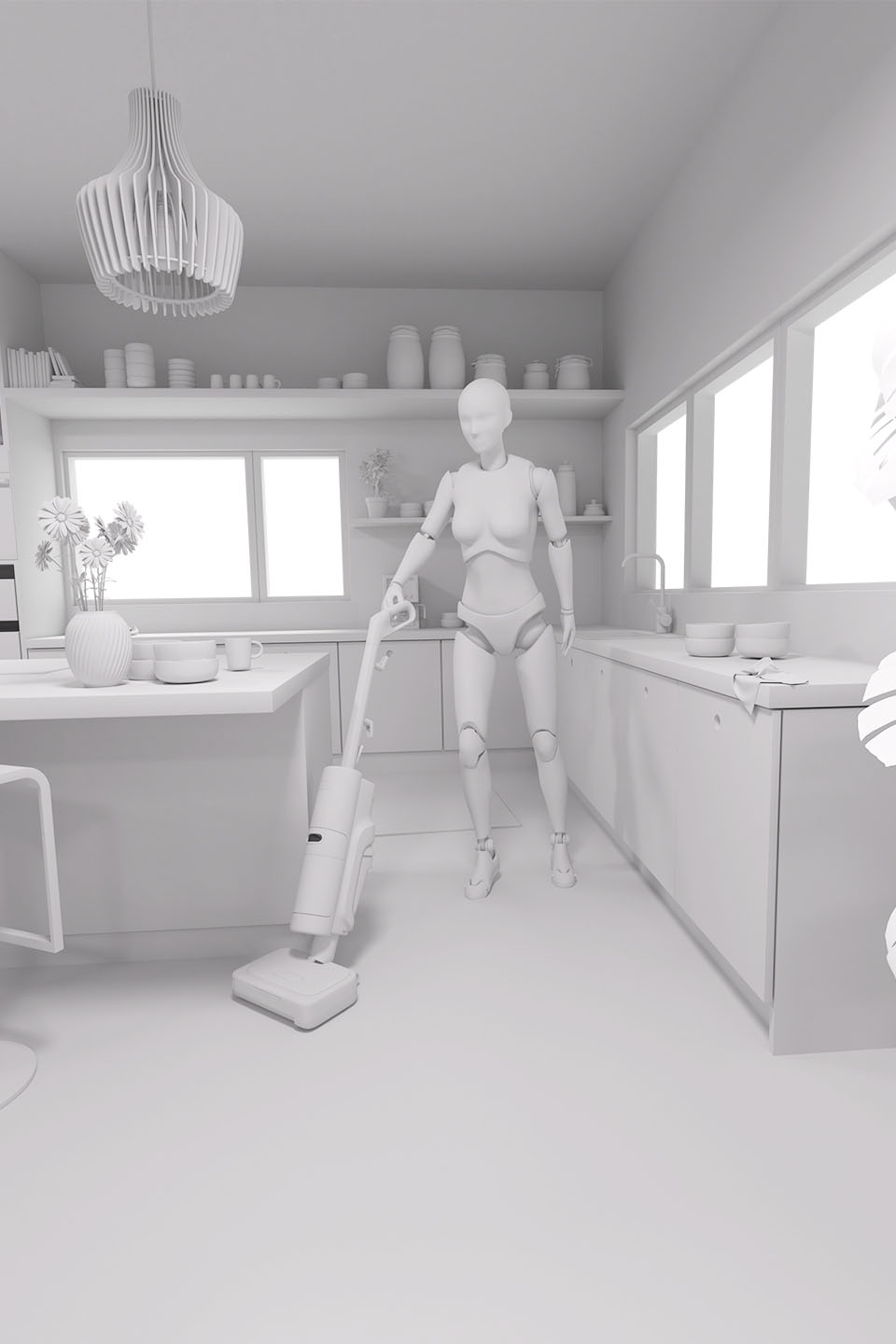
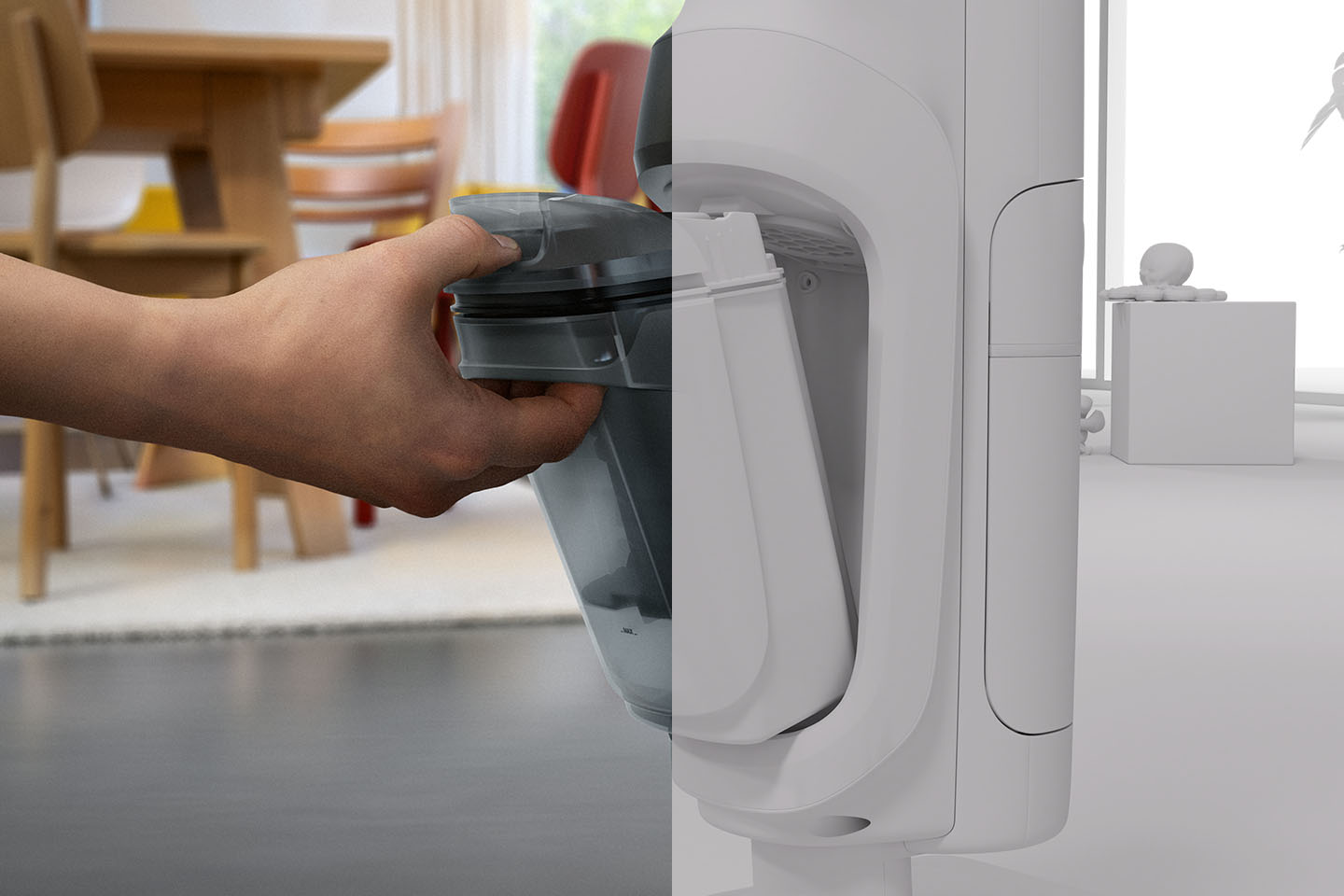
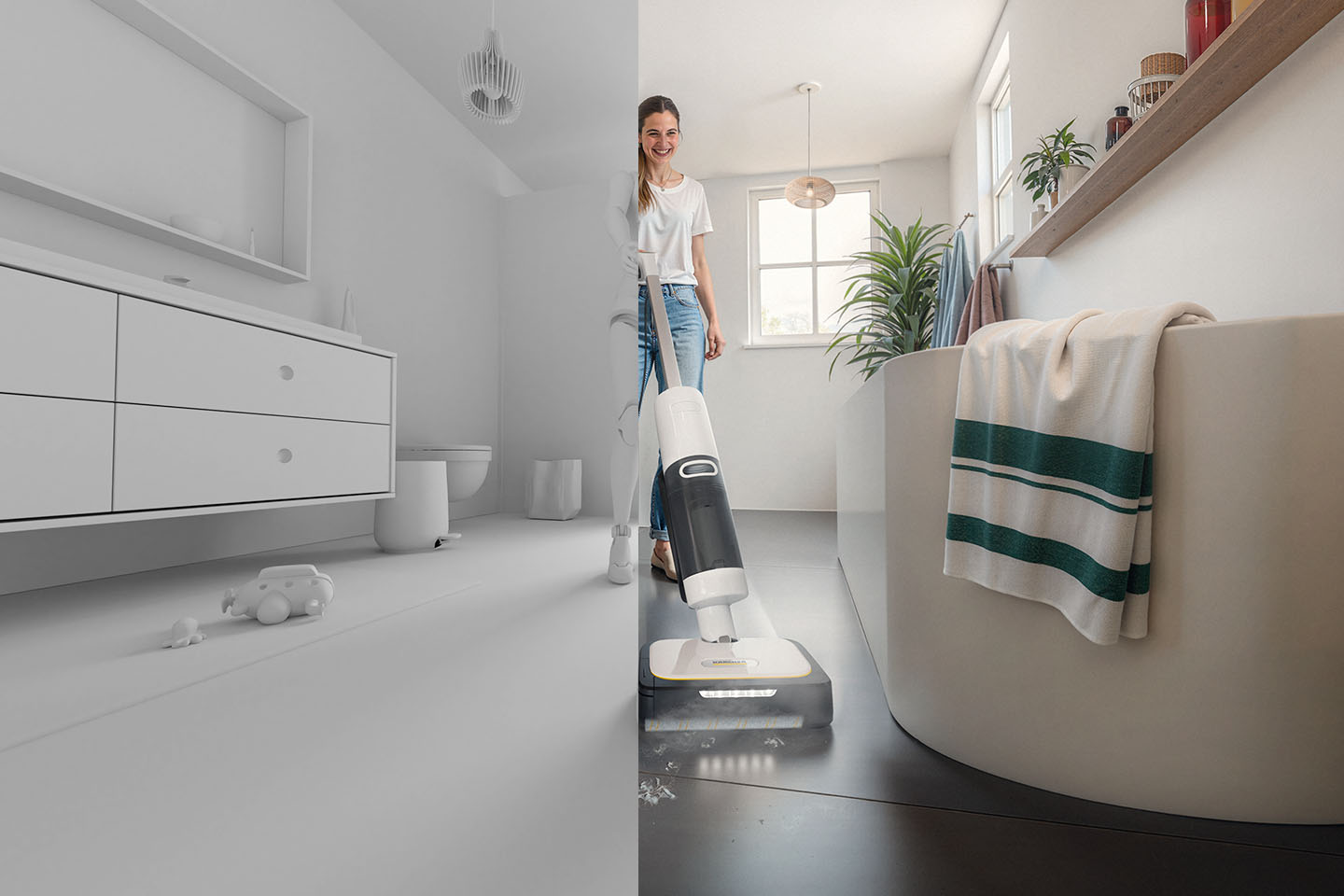
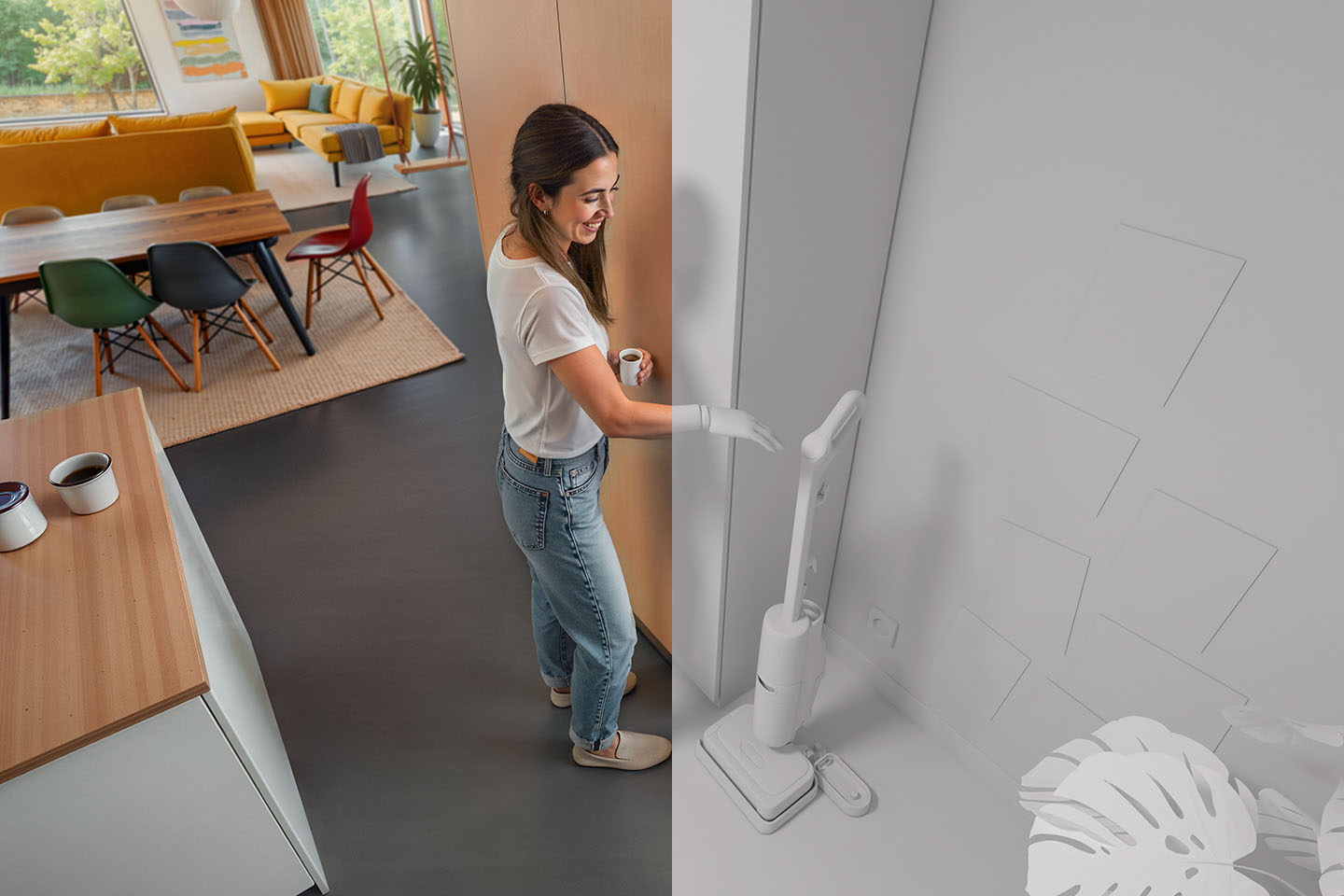
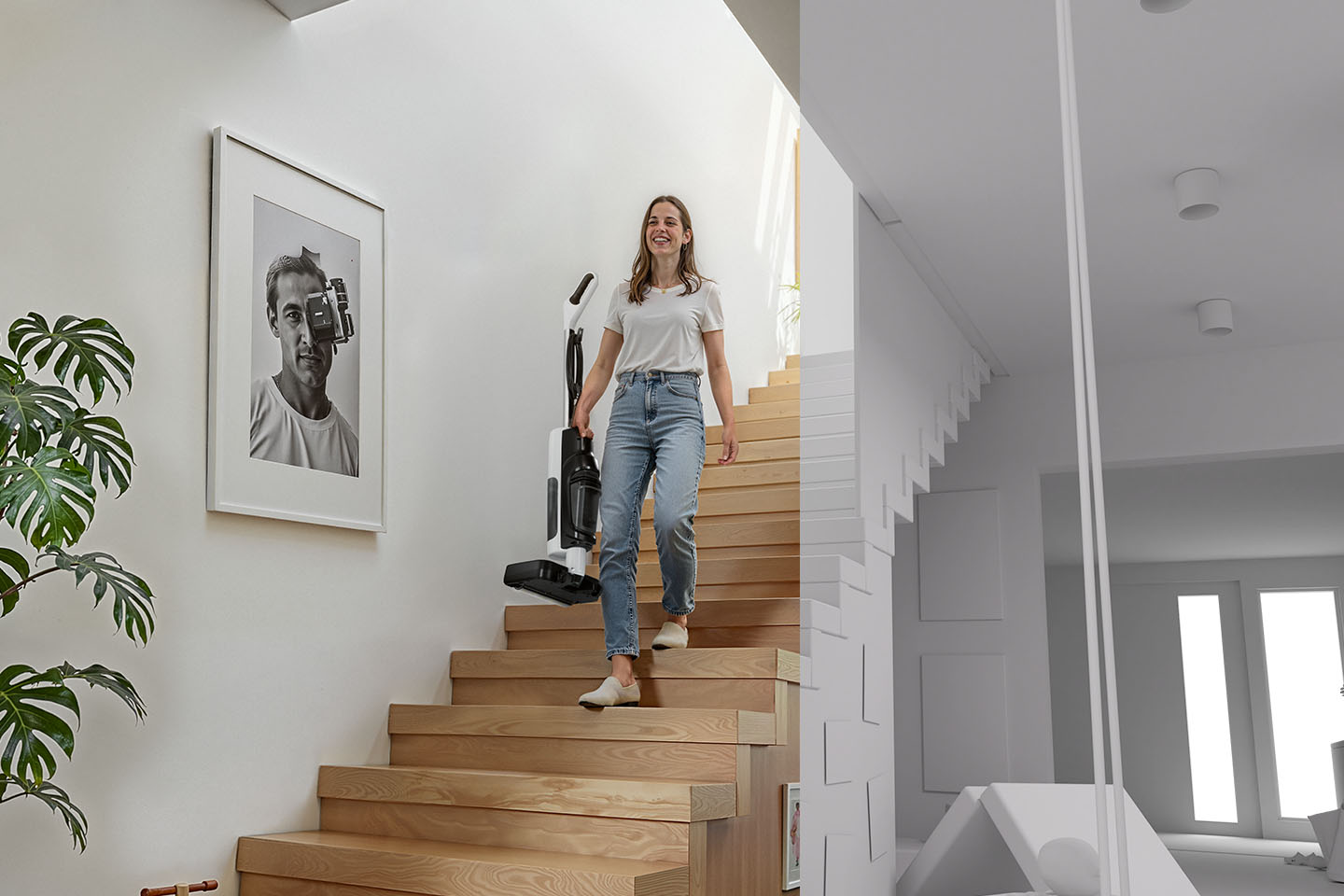
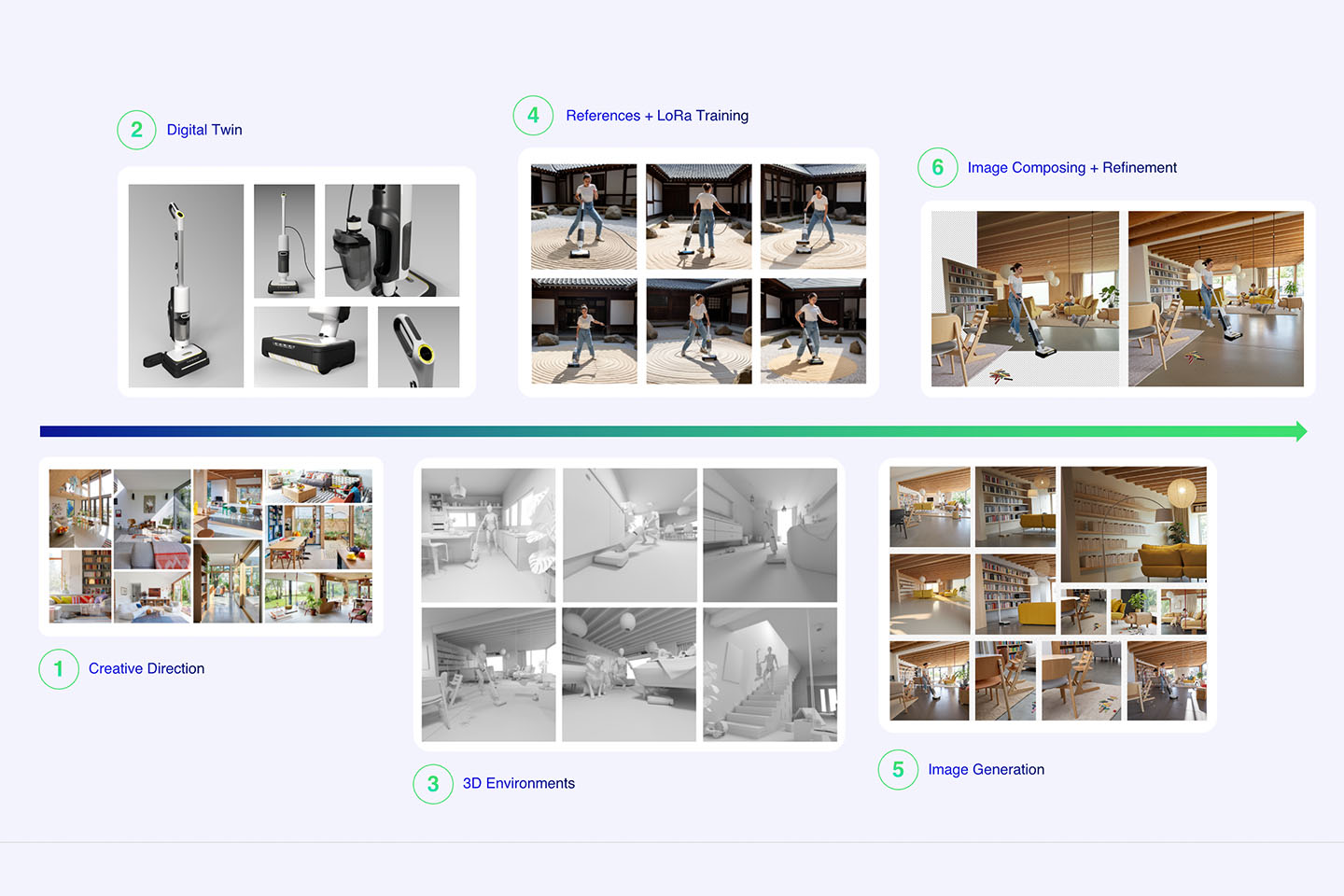
The workflow starts the way any good production does: with creative direction, mood boards, and references. From there, things diverge from the classic playbook. We built a precise digital twin of the hero product—Kärcher's SCV4—to lock in absolute product accuracy from the very first frame.
Around it, we designed rough 3D environments populated with placeholders for people, props, and product. This gave us full creative control over composition, perspective, and lighting before a single AI image was generated. We then trained the AI specifically on our product, environment, and protagonist—so the model wasn't guessing, it was rendering our world.
During generation, we worked with a flood of options. From this growing asset pool, we cherry-picked the strongest frames and enhanced them by re-integrating our Digital Twins, guaranteeing that the final product was always, unmistakably, Kärcher.
CGI, AI, and human craft—working as one production line.
The results
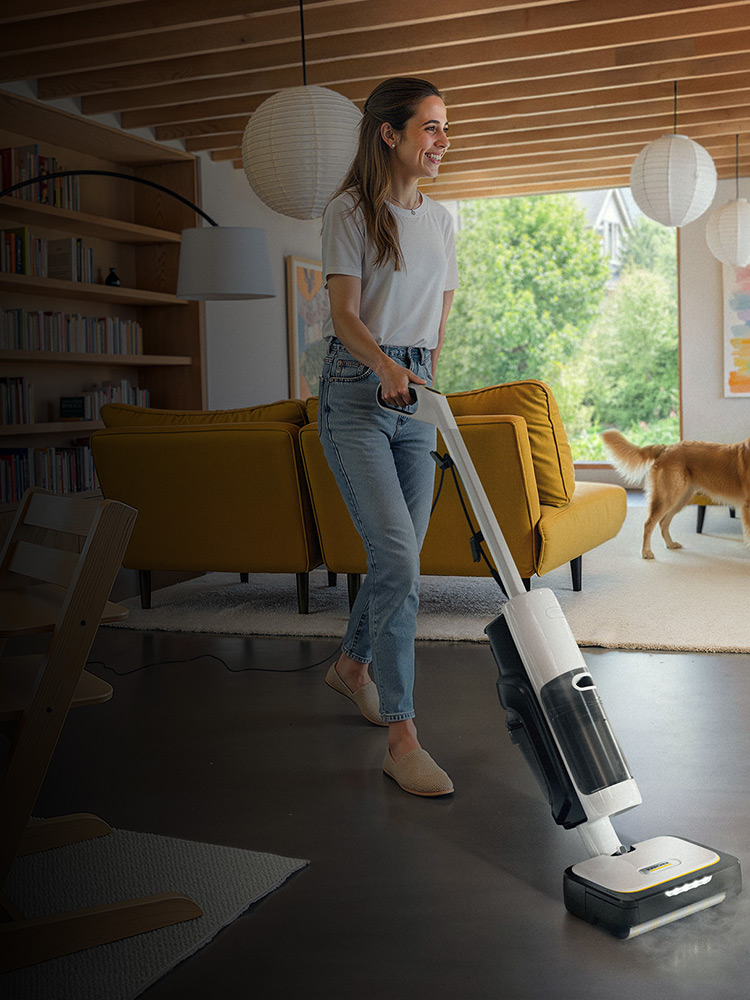
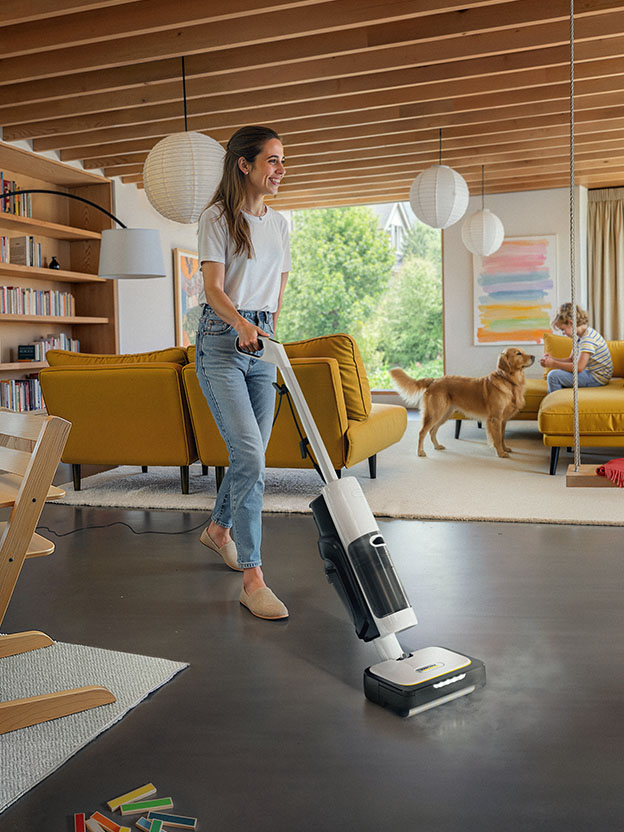
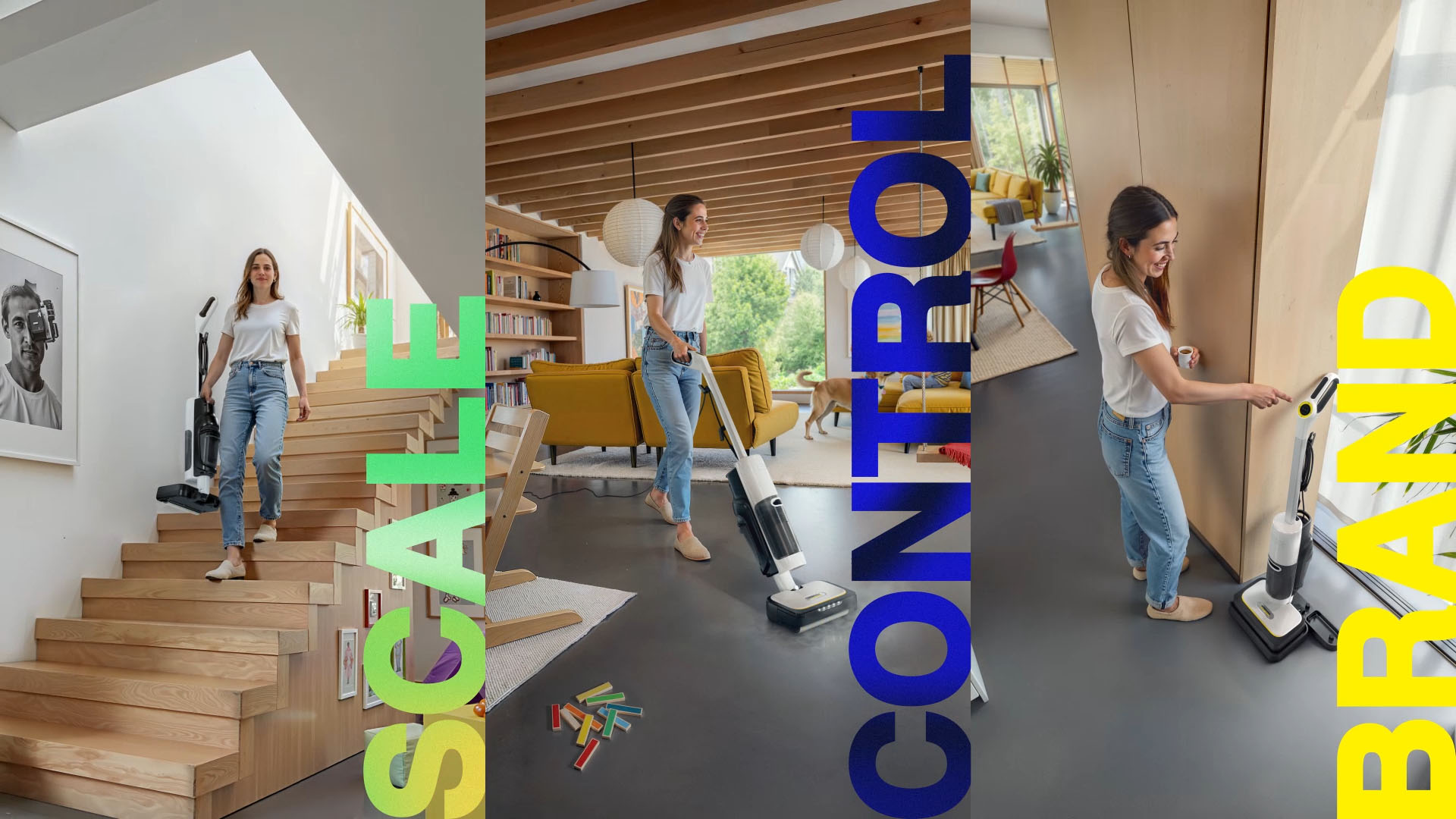
Fourteen application images. Brand-compliant, fully controlled, on-spec. Delivered weeks before a traditional shoot would have been possible, because we didn't need a physical device on set to start producing.
More importantly, we proved ours is a model that scales: virtual shoots before prototypes exist, location flexibility without travel logistics, easier localization across markets, and access to settings that would be hard or impossible to book in the real world. Communication can now start earlier in the product lifecycle—a meaningful edge for a company shipping innovation at Kärcher's pace.

Learnings and Next Steps
The biggest learning: Digital Twins aren't optional. AI alone won't deliver 100% product accuracy—especially when it comes to how a product is held, used, and detailed. That's where purely generative pipelines still fall short, and where 3D remains pivotal for control over perspective, accuracy, and handling.
At the time we ran the project, the available AI models required substantial manual cleanup. That landscape has shifted fast. We're currently rebuilding the workflow on top of state-of-the-art models, with a clear target: reach the cost level of a classic photoshoot while keeping every advantage we've already unlocked—speed, flexibility, variety, and earlier go-to-market.
Application imagery for Kärcher is complex and highly individual. A fully automated workflow isn't realistic, and it isn't the goal. The goal is leverage. This year, we're aiming for 10% of Kärcher's product imagery to be AI-produced—and growing that share, year over year, as the technology and our craft mature.
The era of waiting for the product to exist before you can talk about it is ending. Kärcher and Wongdoody are showing what comes next.
Our latest work